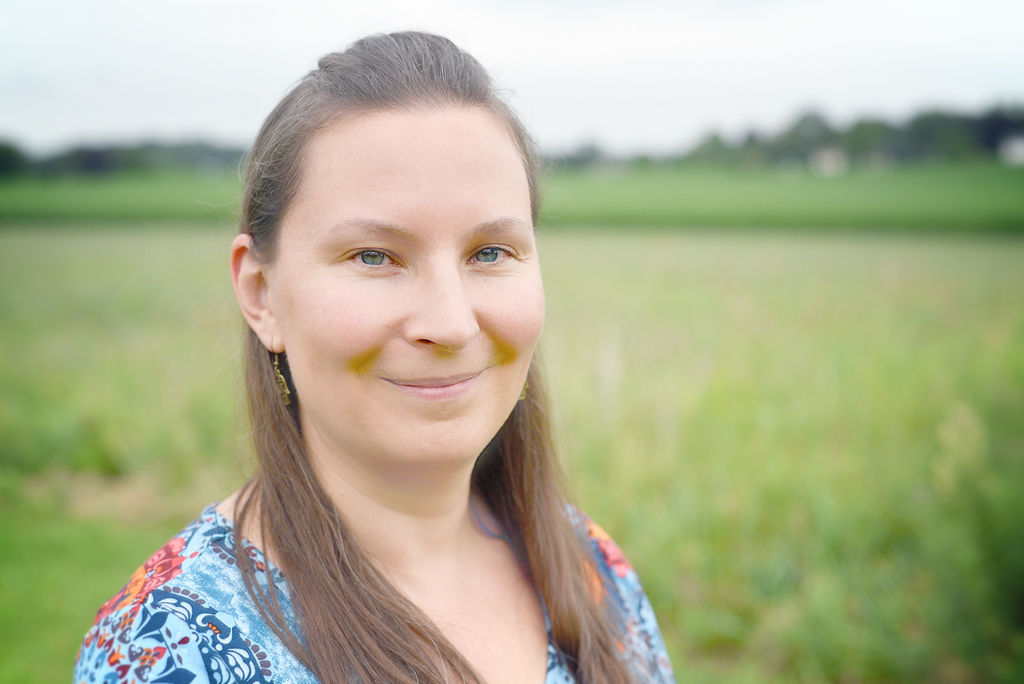
Dr. Annette Vielleux
You may have spent years appearing capable, responsible, and successful while keeping different parts of your inner experience carefully separated. Now the walls between those compartments may be starting to come down. Lost time, conflicting inner voices or needs, shifts in your sense of self, memory gaps, or experiences of feeling unreal may be becoming harder to ignore. You may already have a diagnosis of dissociative identity disorder or OSDD, or you may simply know that trauma, anxiety, or depression do not fully explain what you experience. Either way, you deserve a psychologist who understands dissociation and will approach every part of your experience with respect rather than fear, disbelief, or pressure. I am a licensed Wisconsin psychologist specializing in complex trauma and dissociative disorders. My formal training in dissociation began in 2009, and I later completed my doctoral dissertation on the assessment of dissociative disorders. For more than a decade, I have continued developing this expertise through consultation with Dr. Richard Hohfeler and ongoing training through the International Society for the Study of Trauma and Dissociation. I offer ongoing psychotherapy as well as specialized psychological assessment using instruments such as the SCID-D and MID when greater diagnostic clarity is needed. Sessions are available virtually throughout Wisconsin and in person in Burlington. I currently have openings for new clients.
Licensed
Wisconsin
she/her
Treatment Approach:
My approach is relational, attachment-based, affect-theory–informed, and psychodynamic. Treatment is organized around a phase-oriented model that includes safety and stabilization, trauma processing, and integration. These phases are not a rigid sequence; we move between them according to your needs, readiness, and current level of stability. I incorporate Ego State Therapy to help us understand the roles, needs, fears, and protective intentions of different parts of the self. Parts are approached with respect and curiosity—not as symptoms to eliminate. Our work may focus on strengthening internal communication, reducing conflict among parts, increasing cooperation, and helping you remain more present and connected in daily life. Integration is individually defined. It may mean greater communication and continuity, more shared awareness, increased cooperation, or fusion when that is genuinely desired. I do not assume that fusion is the goal for every person or system. I follow the ISSTD treatment guidelines and participate regularly in advanced training and consultation related to trauma and dissociation. The work is collaborative and carefully paced, with attention to safety, consent, therapeutic trust, and your subjective experience. I often ask questions such as, “What is that like for you?” rather than imposing an interpretation on what you experience. When appropriate, I incorporate clinical hypnosis to support grounding, anxiety management, emotional regulation, communication with parts, and carefully paced trauma work. Hypnosis is used with informed consent and attention to dissociative stability; it is not used to force memory retrieval or determine whether a memory or image is historically literal. Throughout therapy, we remain curious about how earlier experiences and survival adaptations continue to shape your relationships, emotions, body, identity, and sense of safety in the present.
Contact
262-208-4838
488 Milwaukee Ave, Burlington, WI 53105
www.annettevielleuxpsyd.com
Insurance: I am not taking any new insurance clients at this time.
Therapy Type:
Individual psychotherapy
Details
$330 Hourly
Either in-person or online
WI-USA
Accepting new clients